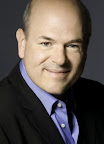
Is it just me, or do Florida Governor Charlie Crist and actor John Slatterly of Mad Men fame look the same (at least, in profile)?
For what it's worth, Roger would probably be pretty good at politics, but if the writers decide to have him run for election and win, it would completely ruin his character since he'd no longer be able to just say whatever he felt like saying all the time.
Showing posts with label politics. Show all posts
Friday, February 12, 2010
Wednesday, March 25, 2009
All Aboard the Dictatorship
It turns out that I was wrong, Parade Magazine did publish their annual survey of the world's worst dictators this year. This is, of course, the first worst dictators survey of the Obama administration. The whole enterprise of ranking the world's worst tyrants in a general interest newspaper insert magazine seemed to make a modicum of sense during the Bush years. I can't say that I would be surprised if it is eventually revealed that the former President used the survey when making key foreign policy decisions. We'll see if this enterprise continues as the US hopefully returns to a more nuanced approach to foreign policy.
While much has changed in Washington, not much has changed in the annual dictator rankings. Zimbabwe's Robert Mugabe rocketed up to the top spot from sixth place last year. My money was on Sudan's Omar al-Bashir capturing the top spot on the strength of his recent ICC arrest warrant, but he had to settle for second place once again. The only newcomers to the top 10 list this year were Libya's Muammar Qaddafi, who moved from 11th place to 10th, and Turkmenistan's Gurbanguly Berdymuhammedov, who debuted on the list in 9th place this year.
Parade cited Zimbabwe's hyperinflation, cholera epidemic, and ZANU-PF thuggery as the reasons for Mugabe's rise to the top of the list. With the exception of the cholera epidemic, all of those things were true last year when Mugabe was deemed only the sixth-worst dictator in the world (and I'm guessing that Zimbabwe was hardly a public health success story even before the cholera epidemic). If anything, Mugabe improved his behavior in 2008 by agreeing in principle to a power-sharing government (though, as Parade correctly points out, he has not honored either the spirit or the letter of the agreement).
The inclusion of Berdymuhammedov is another head-scratcher. You may remember that he took over power in 2006 after the death of Saparmurat Niazov, a fixture on any survey of the world's worst dictators. Berdymuhammedov has been in power for only a couple of years and while Turkmenistan has not become a beacon of peace and freedom in Central Asia, I can't imagine why he would be ranked higher than some of his neighbors, including Uzbekistan's Islam Karimov (11th place in this year's survey).
While much has changed in Washington, not much has changed in the annual dictator rankings. Zimbabwe's Robert Mugabe rocketed up to the top spot from sixth place last year. My money was on Sudan's Omar al-Bashir capturing the top spot on the strength of his recent ICC arrest warrant, but he had to settle for second place once again. The only newcomers to the top 10 list this year were Libya's Muammar Qaddafi, who moved from 11th place to 10th, and Turkmenistan's Gurbanguly Berdymuhammedov, who debuted on the list in 9th place this year.
Parade cited Zimbabwe's hyperinflation, cholera epidemic, and ZANU-PF thuggery as the reasons for Mugabe's rise to the top of the list. With the exception of the cholera epidemic, all of those things were true last year when Mugabe was deemed only the sixth-worst dictator in the world (and I'm guessing that Zimbabwe was hardly a public health success story even before the cholera epidemic). If anything, Mugabe improved his behavior in 2008 by agreeing in principle to a power-sharing government (though, as Parade correctly points out, he has not honored either the spirit or the letter of the agreement).
The inclusion of Berdymuhammedov is another head-scratcher. You may remember that he took over power in 2006 after the death of Saparmurat Niazov, a fixture on any survey of the world's worst dictators. Berdymuhammedov has been in power for only a couple of years and while Turkmenistan has not become a beacon of peace and freedom in Central Asia, I can't imagine why he would be ranked higher than some of his neighbors, including Uzbekistan's Islam Karimov (11th place in this year's survey).
Wednesday, March 04, 2009
America's Finest Editorial Cartoons
How is it possible that I just found out about The Onion's weekly editorial cartoon today? Here are some of my favorites.
Labels:
comics,
humor,
political cartoons,
politics,
the onion
Wednesday, February 25, 2009
Good and Bad
The first no-hitter than I experienced was the no-hitter that the Tigers' Jack Morris pitched in 1984. It was the first no-hitter pitched by a Tiger since Jim Bunning hurled a no-no in 1958. Being a young Tigers fan, I filed this piece of information somewhere in my brain and didn't think about it again for a while. At some point in my adult life, I learned Jim Bunning had gotten into politics after hanging up his spikes. More recently, I've learned that he's kind of a jerk. I don't have anything interesting to say here, it's just funny how I have a one highly positive and one highly negative data point about Jim Bunning, separated by about 25 years.
Labels:
baseball,
jack morris,
jim bunning,
no-hitter,
politics,
sports,
tigers
Tuesday, January 20, 2009
01.20.09

When all of the 01.20.09 - Bush's Last Day swag started showing up a couple years ago, I got a little worried. I wasn't worried that Bush was going to amend the Constitution and run for a third term or declare himself President-for-Life or anything like that. I was worried that by tempting fate, we'd wind up trading Bush for someone even worse (President Rush Limbaugh, anyone?). History is full of examples where one bad leader was deposed only to be replaced by someone who was even worse. To be fair, most of those examples involve revolutions and coups d'état, not orderly changes of power after free and fair elections. Still, I'm glad that we managed to dodge that bullet. I suppose it's possible for Obama to turn out to be even worse than Bush, but I feel like it would require Obama to submit himself to some sort of new brain-altering technology that is unlikely to be developed within the next four years.
Labels:
2008,
barack obama,
election,
george w. bush,
politics,
president
Tuesday, April 08, 2008
Abundantly Clear
I just finished reading Brink Lindsey's The Age of Abundance. It's something of a condensed libertarian history of the US, with an emphasis on the postwar period. The crux of the book is the idea that the culture war politics that have pervaded American political discourse since the late 1960s are a product of a libertarian awakening of sorts. The anti-establishment left and the religious right are two sides of the same coin. The rise of mass affluence has given people the chance to spend their surplus time, energy, and money on defining themselves, connecting with people who share their interests and values, and recruiting others to their side. Along the way, the population has become more comfortable with the ideas social and economic liberty, possibly unbeknownst to themselves. While I largely agreed with this thesis before reading the book, I think the book does upend a lot of the conventional wisdom about politics in postwar America, so it could be a very interesting read for anyone who has never been exposed to the writing of Lindsey and his contemporaries.
Wednesday, March 12, 2008
Spit Take
I don't have anything insightful to add to the Elliot Spitzer discussion, but if someone decides to make a movie about him, I have the perfect actor for the role. I've always thought that actor & comedian Larry Miller was a dead ringer for Spitzer. I have a tendency to see look-alikes that no one else agrees with, but I'm pretty confident about this one.

Labels:
elliot spitzer,
larry miller,
look alikes,
politics
Friday, February 22, 2008
Back to the Future
This post is probably the most interesting thing I've read about Kosovo's recent declaration of independence from Serbia. It's just one man's opinion, but often times, news stories gain a lot more poignancy when viewed through the lens of actual human experience instead of history, politics, economics, etc. More than anything else, his post reminded me of one of the things I like most about life in America. For the most part, we don't have to deal with these deep-seated ethnic and sectarian grudges. Our history is short and we're generally pretty ignorant of whatever history we have. While many a hand has been wrung over America's historical forgetfulness and incessant focus on the future, I think that overall, it's better to be too forward looking than too mired in the past.
Monday, February 18, 2008
Dictated but not Led
It's the middle of February again, which can only mean one thing. It's time for Parade magazine's annual survey of the world's worst dictators. I've come to accept the sheer absurdity of a magazine that only tangentially covers anything that could be considered world news the other 51 weeks of the year publishing an annual ranking of the world's worst dictators, so I don't have any additional criticism to offer about the concept. As for the results, let's take a look at the top 10.
1. Kim Jong-Il, North Korea: Kim finally grabbed the number one spot after finishing second the past two years. I can't really argue with this choice. In addition to his pure dictatorial bona fides, he's the only dictator who has a control group against which to compare his misrule. It's hard to say how much better (or worse) most countries would be without their current dictator, but it's pretty safe to say that had the Korean peninsula not been cleaved in two following World War II, the northern section of it would look a lot more like today's South Korea than today's North Korea.
2. Omar Al-Bashir, Sudan: No surprises here as well. I find it strange that Parade decided to mention that the Clinton administration imposed trade sanctions on Sudan in 1997 but exempted gum arabic (of which the US imports 4000 tons annually from Sudan). Are they trying to pin the blame for the Darfur genocide on the Clinton administration? Will leading right-wing websites pick up on this and start selling "No Blood for Gum Arabic" bumper stickers?
3. Than Shwe, Myanmar: He was the biggest mover in the top 5 (up 3 spots from last year's 6th place finish). I was kind of surprised, I figured he would have moved up even higher after last year's violent crushing of the saffron revolution.
4. King Abdullah, Saudi Arabia and 5. Hu Jintao, China: Abdullah and Hu swapped places in this year's poll. I still think Hu is somewhat out of place on this list. He's more of a caretaker than a dictator. Of course, he's the caretaker of a government that brutalizes its own people so he obviously is not without fault, but he will step down when his time comes and be replaced by someone else who will probably maintain the status quo, but it at least gives China a mechanism to gradually ease its way into becoming a freer society, which is more than most of the other people on this list can say.
6. Robert Mugabe, Zimbabwe: Mugabe moved up from 7th place last year. In terms of sheer venality, Mugabe should probably be in first place.
7. Sayyid Ali Khamenei, Iran: Khamenei wins the most improved dictator award, falling from third place last year all the way to seventh. This is obviously a result of the minor cooling off in the US versus Iran brinksmanship, but I'm still surprised to see Iran fall this far on the list.
8. Pervez Musharraf, Pakistan: Musharraf cracked the top 10 once again after finishing a distant 15th last year. Musharraf is another strange selection. Though he did gain power through a bloodless coup, his regime has gained a modicum of electoral legitimacy and he did resign his military post at the end of last year. Musharraf is very middle-of-the-road as a dictator; Pakistan's instability and geostrategic importance are the reasons for his inclusion on this list.
9. Islam Karimov, Uzbekistan: Karimov moved down one spot from last year's poll, presumably because nothing good enough or bad enough to report happened in Uzbekistan last year.
10. Isayas Afewerki, Eritrea: Afekerki is the biggest surprise of this year's top 10, moving up from 13th last year. His ascension is probably due to Ethiopia's incursion into Somalia last year, which led to accusations of Eritrean support for the vanquished Islamist regime in Mogadishu (under the enemy of my enemy is my friend doctrine) and the resulting flare up in tensions along the volatile Ethiopia-Eritrea border.
The Rookie of the year was Cuba's Raul Castro, who finished 18th in his first full year behind the helm in Cuba. This highlights the key failing of this survey. The Castro regime is every bit as repressive as China, yet China finished 13 places ahead of Cuba. The difference, of course, is that China has the potential to harm the US economically and/or militarily, while Cuba does not. As I've said before, this list needs to decide what it wants to be, a ranking of the worst dictators in the world or a ranking of the worst dictators whose misrule could potentially impact the US.
Some other notable mentions include Belarus' Aleksandr Lukashenka, who at 16th place is Europe's only top 20 finisher, and the world's last reigning absolute monarch, King Mswati III of Swaziland. As if finishing 14th wasn't already bad enough, Parade incorrectly named Mswati the ruler of the nonexistent country of Equatorial Swaziland.
1. Kim Jong-Il, North Korea: Kim finally grabbed the number one spot after finishing second the past two years. I can't really argue with this choice. In addition to his pure dictatorial bona fides, he's the only dictator who has a control group against which to compare his misrule. It's hard to say how much better (or worse) most countries would be without their current dictator, but it's pretty safe to say that had the Korean peninsula not been cleaved in two following World War II, the northern section of it would look a lot more like today's South Korea than today's North Korea.
2. Omar Al-Bashir, Sudan: No surprises here as well. I find it strange that Parade decided to mention that the Clinton administration imposed trade sanctions on Sudan in 1997 but exempted gum arabic (of which the US imports 4000 tons annually from Sudan). Are they trying to pin the blame for the Darfur genocide on the Clinton administration? Will leading right-wing websites pick up on this and start selling "No Blood for Gum Arabic" bumper stickers?
3. Than Shwe, Myanmar: He was the biggest mover in the top 5 (up 3 spots from last year's 6th place finish). I was kind of surprised, I figured he would have moved up even higher after last year's violent crushing of the saffron revolution.
4. King Abdullah, Saudi Arabia and 5. Hu Jintao, China: Abdullah and Hu swapped places in this year's poll. I still think Hu is somewhat out of place on this list. He's more of a caretaker than a dictator. Of course, he's the caretaker of a government that brutalizes its own people so he obviously is not without fault, but he will step down when his time comes and be replaced by someone else who will probably maintain the status quo, but it at least gives China a mechanism to gradually ease its way into becoming a freer society, which is more than most of the other people on this list can say.
6. Robert Mugabe, Zimbabwe: Mugabe moved up from 7th place last year. In terms of sheer venality, Mugabe should probably be in first place.
7. Sayyid Ali Khamenei, Iran: Khamenei wins the most improved dictator award, falling from third place last year all the way to seventh. This is obviously a result of the minor cooling off in the US versus Iran brinksmanship, but I'm still surprised to see Iran fall this far on the list.
8. Pervez Musharraf, Pakistan: Musharraf cracked the top 10 once again after finishing a distant 15th last year. Musharraf is another strange selection. Though he did gain power through a bloodless coup, his regime has gained a modicum of electoral legitimacy and he did resign his military post at the end of last year. Musharraf is very middle-of-the-road as a dictator; Pakistan's instability and geostrategic importance are the reasons for his inclusion on this list.
9. Islam Karimov, Uzbekistan: Karimov moved down one spot from last year's poll, presumably because nothing good enough or bad enough to report happened in Uzbekistan last year.
10. Isayas Afewerki, Eritrea: Afekerki is the biggest surprise of this year's top 10, moving up from 13th last year. His ascension is probably due to Ethiopia's incursion into Somalia last year, which led to accusations of Eritrean support for the vanquished Islamist regime in Mogadishu (under the enemy of my enemy is my friend doctrine) and the resulting flare up in tensions along the volatile Ethiopia-Eritrea border.
The Rookie of the year was Cuba's Raul Castro, who finished 18th in his first full year behind the helm in Cuba. This highlights the key failing of this survey. The Castro regime is every bit as repressive as China, yet China finished 13 places ahead of Cuba. The difference, of course, is that China has the potential to harm the US economically and/or militarily, while Cuba does not. As I've said before, this list needs to decide what it wants to be, a ranking of the worst dictators in the world or a ranking of the worst dictators whose misrule could potentially impact the US.
Some other notable mentions include Belarus' Aleksandr Lukashenka, who at 16th place is Europe's only top 20 finisher, and the world's last reigning absolute monarch, King Mswati III of Swaziland. As if finishing 14th wasn't already bad enough, Parade incorrectly named Mswati the ruler of the nonexistent country of Equatorial Swaziland.
Sunday, February 11, 2007
Dictator of the Year
If Parade Magazine's annual Worst Dictators in the World issue isn't enough to get me out of the blogging doldrums, I don't know what is.
This year's list began with a disclaimer noting that previously ranked dictators Fidel Castro of Cuba and Saparmurat Niyazov of Turkmenistan were excluded from this year's list. Castro was excluded for handing over the reigns (at least in name) to his brother in July and Niyazov was excluded because he died in December. I don't agree with either of these choices because this list has always been a survey of the worst dictators over the past year. Both men were in power for most of last year, and both had personality cults so immense that their presence will be felt in their countries for decades to come, so I don't think they should have been excluded.
Sudan's Omar Al-Bashir and North Korea's Kim Jong Il finished 1-2 for the second year in a row. Iran's Ayatollah Khamenei shot up six places into third place this year. I'm not going to defend Khamenei, but I think it's pretty obvious that his rise from 18th to 9th to 3rd place over the past three years has more to do with the increasingly defiant and bellicose rhetoric that has been coming out of Tehran with regards to nuclear weapons, Israel, Iraq, etc. While Iran has become a more repressive place over the past few years, it's hard to justify Khamenei's jump from the outskirts of the "best of the rest" two years ago to the top three today based solely on his lousy human right record.
The top 10 welcomed two new members this year, Libya's Muammar Qaddafi (who placed 11 last year) and Syria's Bashar Al-Assad, who moved up from 16th. I'm not sure why Qaddafi moved up, since if anything, he's been cleaning up his act as of late.
China's Hu Jintao jumped up two places to reclaim the number 4 spot this year. I continue to be puzzled by his high ranking in this survey. The Chinese government is no champion of human rights, but at least they have given their population some measure of economic freedom. Furthermore, China appears to be on a positive trajectory. The Chinese people as a whole live freer and more prosperous lives than they did ten, twenty, or thirty years ago, which is more than the people who live in most of the countries under the control of the top 10 dictators can say. The people of Myanmar have been stuck living under the control of a brutal military junta over the past 15 years and have seen their economy collapse and their country branded an international pariah and yet their leader, Than Shwe, comes in two places below Hu this year.
The 10 worst dictators list needs to decide if it wants to rank the world's dictators solely based on their dictatorial bona fides or if it wants to weigh each regime's human rights record against it geopolitical importance. The reason China always places so high (I assume) is because it's a country that wields a lot of power on the international stage. This year's list begins with an eye towards geopolitical significance (Sudan, North Korea, Iran, China) but it then switches to a more of a pure dictatorial quotient, placing Zimbabwe in the number 7 spot and four leaders of relatively obscure African countries in places 11-20 (Equatorial Guinea: 11, Swaziland: 12, Eritria: 13, Cameroon: 19). I'm really curious as to how Cameroon's Paul Biya managed to move from unranked to number 19 this year. I feel like I pay fairly close attention to international news and I fancy myself a bit of an Africa watcher and I've never ever heard of this guy. I don't recall reading any news about Cameroon in the past year good or bad (other than the Cameroon Crazies).
This year's list began with a disclaimer noting that previously ranked dictators Fidel Castro of Cuba and Saparmurat Niyazov of Turkmenistan were excluded from this year's list. Castro was excluded for handing over the reigns (at least in name) to his brother in July and Niyazov was excluded because he died in December. I don't agree with either of these choices because this list has always been a survey of the worst dictators over the past year. Both men were in power for most of last year, and both had personality cults so immense that their presence will be felt in their countries for decades to come, so I don't think they should have been excluded.
Sudan's Omar Al-Bashir and North Korea's Kim Jong Il finished 1-2 for the second year in a row. Iran's Ayatollah Khamenei shot up six places into third place this year. I'm not going to defend Khamenei, but I think it's pretty obvious that his rise from 18th to 9th to 3rd place over the past three years has more to do with the increasingly defiant and bellicose rhetoric that has been coming out of Tehran with regards to nuclear weapons, Israel, Iraq, etc. While Iran has become a more repressive place over the past few years, it's hard to justify Khamenei's jump from the outskirts of the "best of the rest" two years ago to the top three today based solely on his lousy human right record.
The top 10 welcomed two new members this year, Libya's Muammar Qaddafi (who placed 11 last year) and Syria's Bashar Al-Assad, who moved up from 16th. I'm not sure why Qaddafi moved up, since if anything, he's been cleaning up his act as of late.
China's Hu Jintao jumped up two places to reclaim the number 4 spot this year. I continue to be puzzled by his high ranking in this survey. The Chinese government is no champion of human rights, but at least they have given their population some measure of economic freedom. Furthermore, China appears to be on a positive trajectory. The Chinese people as a whole live freer and more prosperous lives than they did ten, twenty, or thirty years ago, which is more than the people who live in most of the countries under the control of the top 10 dictators can say. The people of Myanmar have been stuck living under the control of a brutal military junta over the past 15 years and have seen their economy collapse and their country branded an international pariah and yet their leader, Than Shwe, comes in two places below Hu this year.
The 10 worst dictators list needs to decide if it wants to rank the world's dictators solely based on their dictatorial bona fides or if it wants to weigh each regime's human rights record against it geopolitical importance. The reason China always places so high (I assume) is because it's a country that wields a lot of power on the international stage. This year's list begins with an eye towards geopolitical significance (Sudan, North Korea, Iran, China) but it then switches to a more of a pure dictatorial quotient, placing Zimbabwe in the number 7 spot and four leaders of relatively obscure African countries in places 11-20 (Equatorial Guinea: 11, Swaziland: 12, Eritria: 13, Cameroon: 19). I'm really curious as to how Cameroon's Paul Biya managed to move from unranked to number 19 this year. I feel like I pay fairly close attention to international news and I fancy myself a bit of an Africa watcher and I've never ever heard of this guy. I don't recall reading any news about Cameroon in the past year good or bad (other than the Cameroon Crazies).
Subscribe to:
Posts (Atom)